ViberLaser
Precision Welding, Redefined
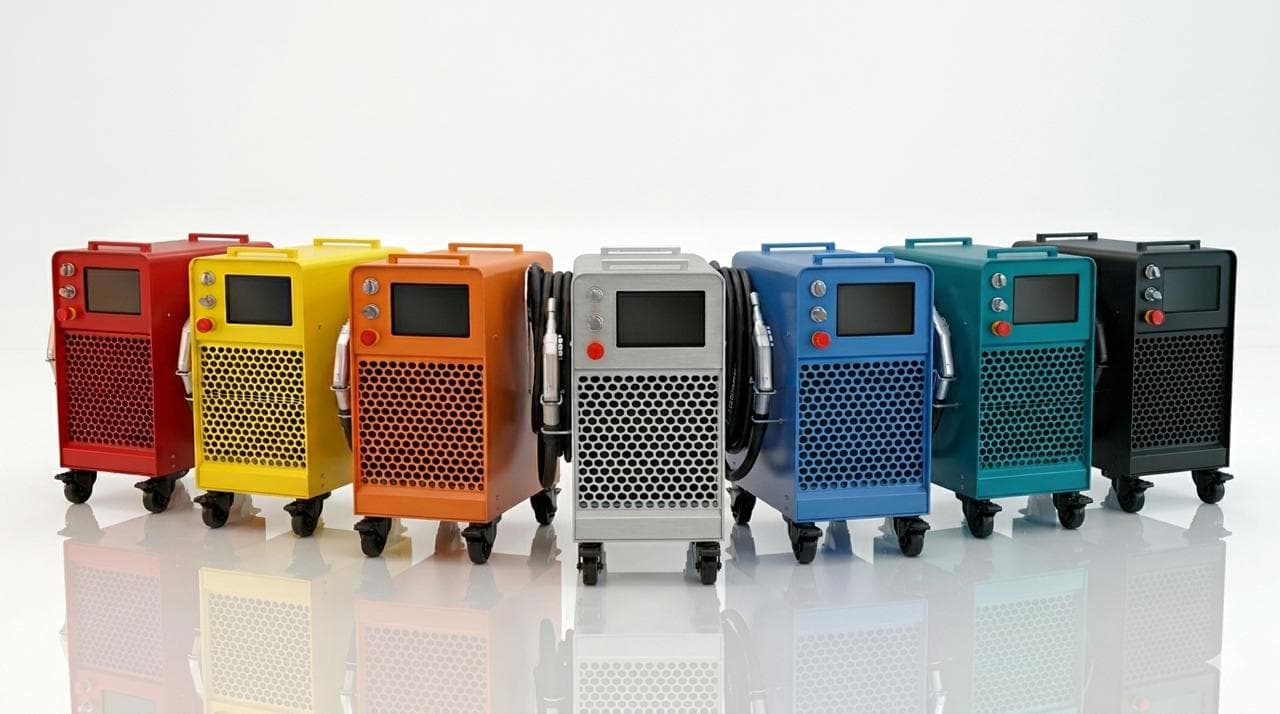
ViberLaser brings industrial-grade fiber laser welding technology to a portable, air-cooled handheld format. No water cooling required. No complex setup. Just point, weld, and achieve professional results every time.
Why Choose ViberLaser
Air-Cooled Design
Revolutionary air-cooling technology eliminates the need for water chillers — lighter, simpler, more portable.
High Power Output
Available in 1000W, 1500W, and 2000W configurations for welding steel, aluminum, copper, and more.
Precision Control
Adjustable power, speed, and wire feed settings for perfect welds on materials from 0.5mm to 6mm.
Portable & Lightweight
Compact design with integrated wheels — move easily between job sites or production lines.
Safety First
Built-in safety sensors, protective housing, and compliance with international laser safety standards.
Low Operating Cost
Energy-efficient fiber laser technology with minimal maintenance and consumable costs.
Our Solutions
ViberLaser VL-1500
Our most popular model — 1500W power output perfect for general fabrication, automotive, and HVAC applications.
- 1500W Fiber Laser Source
- Weld Thickness: 0.5-4mm
- Welding Speed: 0-120mm/s
- Air Cooling System
- Integrated Wire Feeder
ViberLaser VL-2000
Maximum power for demanding industrial applications — thicker materials, faster speeds, professional results.
- 2000W Fiber Laser Source
- Weld Thickness: 0.5-6mm
- Welding Speed: 0-180mm/s
- Dual-Temperature Monitoring
- Touch Screen Interface
Experience the Future of Welding
See ViberLaser in action. Schedule a demo or request pricing for your operation.
How to Select the Right Laser Welding Machine
Follow this guide to choose the perfect fiber laser welder for your needs.
1. Determine Material Types
Identify the metals you'll be welding — steel, aluminum, copper, or mixed materials. Different materials require different power levels.
2. Assess Material Thickness
Measure the thickness of materials you'll weld. Thicker materials require higher power — up to 6mm for VL-2000, up to 4mm for VL-1500.
3. Consider Portability Needs
Evaluate whether you need a stationary setup or portable machine for job sites. Air-cooled designs offer greater mobility.
4. Evaluate Production Volume
Higher volume operations benefit from faster welding speeds and higher power output. Consider your daily welding requirements.
5. Check Safety Features
Ensure the machine has built-in safety sensors, protective housing, and complies with international laser safety standards.